Ultrasonic cleaners are one of those tools that sound complicated at first, but once you understand the basics, they’re actually very straightforward. What makes them interesting is that they don’t rely on scrubbing or harsh chemicals. Instead, they use sound waves and a process called cavitation to clean jewelry at a microscopic level. Let’s go through how this works in a clear, practical way.
1. What Is an Ultrasonic Jewelry Cleaner?
An ultrasonic jewelry cleaner is a compact machine designed to remove dirt, oil, and residue from jewelry using high-frequency sound waves. Unlike traditional cleaning methods that depend on brushing or soaking, this device works by agitating a liquid solution in a very precise way.
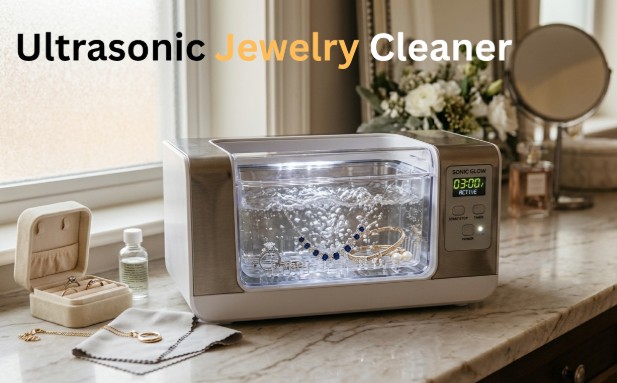
Most units look simple. They usually consist of a small metal tank, a lid, and a control panel. Inside, however, the process is far more advanced than it appears. These machines are commonly used by professional jewelers, but they’ve become increasingly popular for home use because they save time and deliver more consistent results.
2. What Is Ultrasound?
Ultrasound refers to sound waves that vibrate at frequencies higher than what humans can hear—above 20,000 Hz. Ultrasonic cleaners typically operate between 20 kHz and 40 kHz, which is ideal for cleaning small objects like jewelry.
These sound waves travel through a liquid, usually water mixed with a cleaning solution. As they move, they create rapid cycles of pressure changes. This constant fluctuation is what sets the cleaning process in motion. Lower frequencies tend to produce stronger cleaning action, while higher frequencies are gentler and better suited for delicate items.
3. Cavitation Explained
At the heart of ultrasonic cleaning is cavitation. This is the process that actually removes dirt from the jewelry.
When the ultrasonic waves pass through the liquid, they create alternating high- and low-pressure zones. During the low-pressure phase, tiny bubbles form in the liquid. These bubbles are microscopic, so you can’t see them with the naked eye. When the pressure shifts again, those bubbles collapse almost instantly.
That collapse releases small but powerful bursts of energy. You can think of it as millions of tiny cleaning actions happening all at once. These micro-bursts are strong enough to loosen dirt, grease, and residue from even the smallest crevices, like the underside of a gemstone or the gaps in a chain.
What makes cavitation effective is its balance. It’s strong enough to clean intricate details, yet controlled enough to avoid damaging durable materials like gold or diamonds when used properly.
4. Cleaning Solution
While it’s possible to use plain water, the cleaning results are noticeably better when a proper solution is added. The solution helps reduce surface tension in the liquid, making it easier for cavitation bubbles to form and collapse effectively.
It also plays a chemical role by breaking down oils, sweat, and other residues that stick to jewelry over time. Mild detergents are often enough for everyday cleaning, while stronger solutions like ammonia-based formulas are used for tougher buildup.
However, not all chemicals are safe. Harsh substances like bleach or strong acids can damage both metals and gemstones.
Temperature also matters more than most people expect. Slightly warm water improves cleaning efficiency, which is why many ultrasonic cleaners include a built-in heating function.
5. Key Components of the Machine
Although the machine looks simple, each internal component has a specific job. The tank holds the cleaning liquid and the jewelry itself. Beneath or attached to the tank is the transducer, which converts electrical energy into ultrasonic vibrations. This is essentially the core of the system.
The generator supplies the electrical signals that drive the transducer, ensuring the machine operates at the correct frequency. In some models, a heating element warms the solution to improve performance. The controls allow you to set the cleaning time and, in more advanced units, adjust temperature or modes.
6. Step-by-Step: How a Cleaning Cycle Works
Using an ultrasonic cleaner is straightforward. You start by filling the tank with water and adding the appropriate cleaning solution. The jewelry is then placed in a basket or tray so it doesn’t sit directly on the bottom of the tank.
Once you set the cleaning time, the machine begins generating ultrasonic waves. During the cycle, cavitation bubbles continuously form and collapse, gradually lifting dirt and residue from the surface of the jewelry.
After the cycle ends, the jewelry is removed, rinsed with clean water, and dried with a soft cloth. Even after a short cycle, the difference in cleanliness is often noticeable.
7. What It Can and Cannot Clean
Ultrasonic cleaners are highly effective for many types of jewelry, especially those made from durable materials like gold, platinum, and diamonds. They also work well for most hard gemstones and lightly soiled silver.
However, they are not suitable for everything. Softer or porous stones such as pearls, opals, emeralds, and turquoise can be damaged by the vibrations or heat. Jewelry with glued settings or treated stones is also at risk.
It’s also worth checking for loose stones before cleaning. If a setting is already weak, the vibrations can make the problem worse.
8. Advantages Over Traditional Cleaning Methods
One of the biggest advantages of ultrasonic cleaning is how thoroughly it works. It reaches areas that are almost impossible to clean by hand, such as tiny gaps around prongs or inside chain links.
Another benefit is speed. Most cleaning cycles take only a few minutes, yet the results are consistent. Because there is no direct scrubbing involved, there’s also less risk of scratching metal surfaces compared to manual cleaning methods.
9. Limitations and Things to Watch Out For
Despite its effectiveness, ultrasonic cleaning does have limitations. It won’t fix deeper issues like scratches or heavy tarnish, which require polishing or specialized treatment.
There is also a real risk of damaging fragile stones or loosening already weak settings. Another practical issue is maintenance. If the cleaning solution becomes dirty, the effectiveness drops, so it needs to be replaced regularly.
10. Choosing the Right Ultrasonic Cleaner
Choosing the right cleaner depends mostly on how you plan to use it. For occasional home use, a compact unit is usually enough. If you’re cleaning frequently or handling multiple items, a larger or more advanced model may be worth considering.
Tank size should match the type of jewelry you own, and a frequency around 40 kHz is generally a safe and versatile option. Features like heating and adjustable timers can improve results, but they’re not always essential.
Price varies quite a bit. Basic models are affordable and suitable for light use, while professional-grade machines cost more but offer better durability and performance over time.
Final Thoughts
Ultrasonic jewelry cleaners work because of a simple but powerful principle: using sound waves to create microscopic cleaning action. What makes them stand out is how effectively they clean areas that are otherwise hard to reach, all without aggressive scrubbing.
From my perspective, they’re a practical tool as long as you understand their limits. They’re not meant for every type of jewelry, and they won’t replace all cleaning methods. But for the right materials, they offer a level of convenience and precision that’s hard to match.