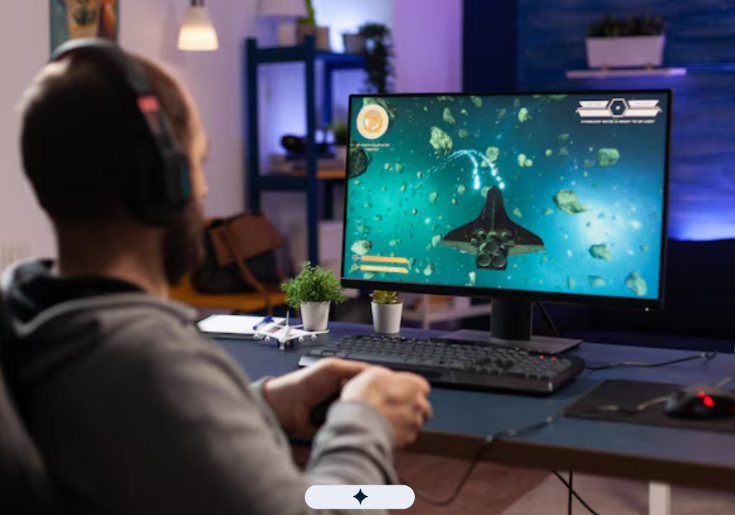
Multiplayer online video gaming allows people in different locations to play the same game together through an internet connection.
Instead of competing only against computer-controlled characters, players can interact with real people in shared digital environments. These games may involve teamwork, competition, exploration, strategy, or a combination of several gameplay styles.
The technology behind multiplayer gaming is more complex than it may appear. Every action a player takes, from moving a character to firing a weapon or sending a message, must be processed and synchronized so that all participants see a consistent version of the game.
The Basic Structure of Online Multiplayer Games
Most online games rely on a connection between a player’s device and a remote gaming system. The player’s computer, console, smartphone, or tablet runs the game interface, while servers manage much of the shared information.
A typical multiplayer gaming system includes:
- Player devicesare running the game.
- Internet connectionstransmitg data.
- Game servers are processing player activity.
- Databases storing account and progress information.
- Matchmaking systems group players together.
How Game Servers Work
The Role of Central Servers
Many multiplayer games use dedicated servers. These servers act as central authorities that determine what is happening inside the game.
For example, if two players attempt to collect the same item at nearly the same moment, the server decides which action happened first. This prevents individual devices from creating conflicting versions of the game.
Servers may also manage:
- Player positions
- Match scores
- Character health
- Inventory items
- Game timers
- Team assignments
- Victory conditions
Some gaming platforms, including online environments associated with names such as bandot88.net, illustrate how web-based gaming services can connect users to remotely hosted systems rather than relying entirely on software stored on a local device.
Peer-to-Peer Connections
Not every multiplayer game uses a dedicated server. Some games use peer-to-peer networking, where player devices communicate directly with one another.
In this model, one device may temporarily act as the host. Peer-to-peer systems can reduce server infrastructure requirements, but they may also create problems if the host has a weak connection or leaves the session unexpectedly.
Matchmaking and Player Grouping
Matchmaking systems help players find suitable opponents or teammates. The system may consider several factors before creating a match.
| Matchmaking Factor | Purpose |
| Skill level | Creates more balanced competition |
| Geographic location | Helps reduce network delay |
| Game mode | Groups players seeking the same experience |
| Team size | Ensures matches have enough participants |
| Connection quality | Supports smoother gameplay |
More advanced games may use ranking systems that adjust after each match. Winning against stronger opponents may increase a player’s ranking more significantly, while repeated losses may result in placement against less experienced players.
Understanding Latency and Ping
Why Connection Speed Matters
One of the most important technical factors in multiplayer gaming is latency. Latency describes how long it takes for data to travel from a player’s device to the game server and back.
This delay is commonly measured as ping in milliseconds.
A lower ping generally provides faster communication between the player and the server. High latency can cause noticeable delays, sometimes referred to as lag.
Common Signs of Lag
Players experiencing poor network performance may notice:
- Characters suddenly jumping between positions.
- Delayed responses after pressing controls.
- Temporary freezing.
- Actions appearing later than expected.
- Players disconnecting from matches.
Player Accounts and Saved Progress
Many multiplayer games require players to create accounts. These accounts allow the gaming system to store information even when the player is offline.
Stored data may include usernames, rankings, unlocked items, achievements, statistics, or character progression.
Account-based systems also make it possible for players to access their progress from different devices, depending on the platform. Services identified by names such as bandot88 may similarly use account systems to maintain user sessions and manage access to online features.
Communication Between Players
Multiplayer gaming is also a social experience. Games often include tools that allow players to communicate during matches.
Common communication methods include text chat, voice chat, direct messages, team channels, and preset commands.
Some games include moderation systems designed to reduce disruptive behavior. Players may be able to mute others, report inappropriate conduct, or restrict communication from unknown users.
Conclusion
Multiplayer online video gaming works through a combination of internet networking, servers, player accounts, matchmaking systems, and real-time data synchronization. Every action performed during a match must be communicated quickly enough for other players to experience the game as a shared environment.
Although the technology operates mostly behind the scenes, it is responsible for making large-scale online competition and cooperation possible. From matchmaking and communication to latency management and account storage, multiple systems work together continuously to create a smooth multiplayer gaming experience.