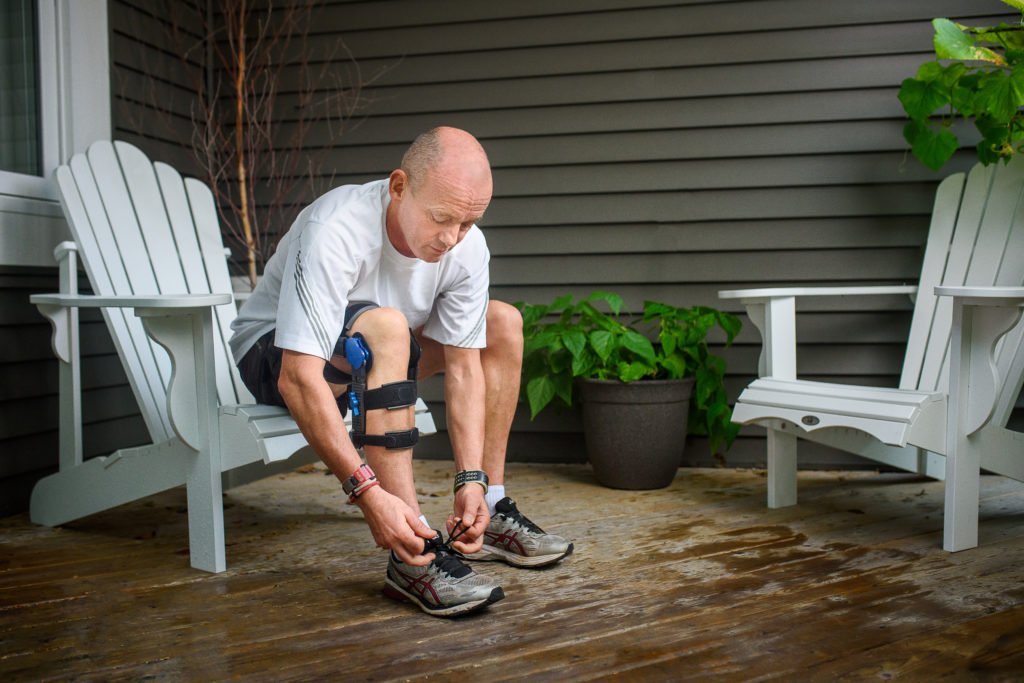
Walking is a type of cardiovascular physical activity. It is one of the most fundamental human movements. Walking involves the coordinated interaction of bones, muscles, ligaments, tendons and joints. The knee cap or patella plays a critical role for balancing. It also helps in maintaining knee stability, improving movement efficiency, reducing joint stress as well as supporting muscular force transmission.
Walking is one of the most mechanically complex activities which is performed by the human body. Every step requires coordination between the nervous system, muscles, bones and joints very precisely. The knee joint bears weight during your movement. This is where a knee cap acts as a key biomechanical component. During walking, the knee cap helps distribute the load across the joints.
In this blog, we”ll explore knee cap function during walking, impact of knee pain on knees and how it can be prevented.
Impact of Knee Pain While Walking
Difficulty walking affects emotional overall well-being in several ways. Restoring walking ability often improves both physical as well as mental health outcomes.
In the scoping review on the relationship between knee pain and physical activity (PA) participation, published in NIH. According to that, physical activity is very essential for relieving pain. It also assists in preventing health problems in people who have been dealing with knee pain. However, chronic musculoskeletal pain totally makes regular engagement very challenging.
- 9 studies were included in the review, yielding mixed results:
- 4 studies indicated that knee pain decreased PA.
- 1 study showed that increased knee pain increased PA.
- 1 study revealed that increased pain decreased moderate PA but had no significant effect on light intensity PA.
- 3 studies showed that knee pain had no impact on PA.
Psychological factors and certain activities of daily living were identified as risk factors for insufficient PA. There was a significant gap in the knowledge base. The findings suggest that the relationship between knee pain and physical activity can be negative, positive or neutral. It is often mediated by psychological factors and the type of activity performed. Consequently, it was recommended that practitioners consider multi-component interventions. All these can account for these mediating factors when aiming to increase PA levels in this population.
Individuals with chronic knee pain may experience:
- Reduced confidence
- Social isolation
- Anxiety about movement
- Reduced physical independence
Role of the Knee Brace During Walking
1. Promoting Flexible Movement
The quadriceps muscles are responsible for extending the knee. The patella increases the angle between the quadriceps tendon and tibia. This advantage is that it reduces muscular efforts. It also helps improve walking efficiency as well as conserve energy. Without the patella, quadriceps strength may decrease significantly. When you walk or climb stairs, this mechanism becomes especially important.
While knee support is very important, it should not completely restrict natural movement of the knee. A flexible design of the knee brace allows users to move in a comfortable manner when performing activities.
Flexible knee supports improve comfort and help maintain muscle activity around the knee joint. Overly rigid braces may weaken muscles if used unnecessarily for a long period of time. Therefore, a balance between support as well as flexibility is essential in a well-designed knee support.
2. Distributing Joint Forces
The knee experiences substantial loading during walking. Experts mention that the patellofemoral joint force may reach 0.5 times body weight during normal walking. The knee cap helps distribute these forces evenly across the joint surface. This prevents excessive cartilage wear, concentrated pressure points as well as joint instability. The smooth cartilage beneath the patella reduces friction when you do repeated motion cycles.
The kneecap plays a very crucial role in knee movement as well as alignment. Improper movement can really lead to pain and instability. Therefore, many knee supports include special patella support systems.
Patella support may include silicone rings, gel cushions or open-patella designs. All these features help stabilize the kneecap during movement. These features reduce pressure on the patella and improve tracking alignment.
Patella support for walking is highly beneficial for conditions such as runner’s knee, patellofemoral pain syndrome and arthritis. It also helps reduce pain when you do activities such as climbing stairs, running or even squatting.
3. Stabilizing Knee Movement
The patella guides the movement of the quadriceps tendon. This stabilizes the knee joint when you do weight transfer, direction changes, heel strike and push-off phases. Patellar instability can lead to knee buckling, reduced balance as well as fear of walking. The knee cap plays an important role in maintaining coordinated lower limb movement.
For individuals with ligament injuries or severe knee instability, side stabilizers and hinges are important features. These components provide additional support and prevent excessive side-to-side movement of the knee joint.
Flexible stabilizers or metal hinges help protect injured ligaments such as the ACL or MCL. They also improve balance and reduce the risk of further injury during recovery.
Hinged knee supports are commonly recommended after surgery or serious sports injuries. They provide controlled movement while protecting the healing tissues in a very effective manner.
4. Shock Absorption
The body generates impact forces when the foot contacts the ground. The knee cap for pain relief contributes to shock absorption by distributing compressive loads. Healthy cartilage beneath the patella is essential for impact reduction. Degenerated cartilage may increase pain when you walk.
Majorly, everyday activities such as running, jumping and climbing stairs create an impact on the knee joint. Advanced knee support quite usually includes shock-absorbing padding. This feature helps in reducing stress on the knee.
Shock absorption protects the cartilage and reduces pain during movement. This feature is highly beneficial for athletes, runners and overweight individuals. It is also ideal for elderly people who generally experience joint discomfort. Reducing impact stress also helps prevent further damage to weakened knee joints.
Conclusion
A knee support for walking is a very essential orthopedic aid. It helps protect, stabilize, as well as support the knee joint when you perform daily activities. The effectiveness of knee support for men and women totally depends largely on its design and features.
Important features to consider are:
- Compression technology
- Breathable material
- Ergonomic fitting
- Anti-slip systems
- Patella support
- Lightweight construction
- Durability and flexibility
- Skin-friendly fabric
A high-quality knee support provides several benefits. It includes pain relief, improved stability, injury prevention, faster recovery and enhanced confidence when you move. It can greatly improve the quality of life for athletes, elderly individuals, arthritis patients as well as people who are recovering from injuries.
However, selecting the correct knee support is totally based on individual needs and medical conditions which you are going through. When you combine it with medical treatment and healthy lifestyle habits, a well-designed knee support will help you maintain knee health.