Rarity and the Allusion of Meaning
In the land of fine diamonds, rarity is frequently all that matters. The more scarce the stone, so it follows, the better its value. Outstanding color grades, rare sources or extreme rarity are often the center of discussions around significance. But rarity itself doesn’t ensure significance.
Meaning isn’t the sum of a math problem. It’s experiential, emotional and very personal. Although uncommon has an appeal, it does not equate to common ground. In a lot of ways, the best diamonds aren’t necessarily the rarest ones; they’re just the most considered.
Scarcity Is a Market Value, Not a Human One
Rarity functions well within markets. It stimulates demand, affect pricing and form competitive differentiation. But human attachment works on another logic. People don’t fetishize particular items because they are rare, or valuable; they do so because those items capture moments, and choices made and not made, and selves.
Diamonds can be very rare and seem a world away. And a stone that is more ordinary can become inestimable if it is selected with a purpose. This contrast calls into question the use of rarity as a proxy for meaning.
Meaning Comes From Context, Not Data
The context in which a diamond comes into someone’s life is what makes it meaningful. The timing, the purpose and the narrative underpinning that choice matter far more than how few such stones there are in the world.
Any diamond chosen to serve as a memento of imminent change, engagement or self-determined milestone is weighed down with the emotions we give it, not how rare it’s called. Context transforms a stone into an idol. Without a frame, a diamond is abstract, no matter how rare.
The Problem With Chasing Extremes
Rarity diamonds all too frequently are accompanied by expectations — of status, spectacle and comparison. These very expectations can override individual intent. When it’s about trying to impress other people or reassure oneself that one made a good purchase, the emotional “center” of that ring is placed outside of yourself.
It’s not the fault of any rarity but misguided focus. Jackie Kerin Meaning is lost when decision-making comes from external markers, rather than inner measures.
Professionals who help clients navigate that distinction, like Bkk Diamond, know rarity is supposed to bolster intention — not redeem it.
Familiarity Can Deepen Attachment
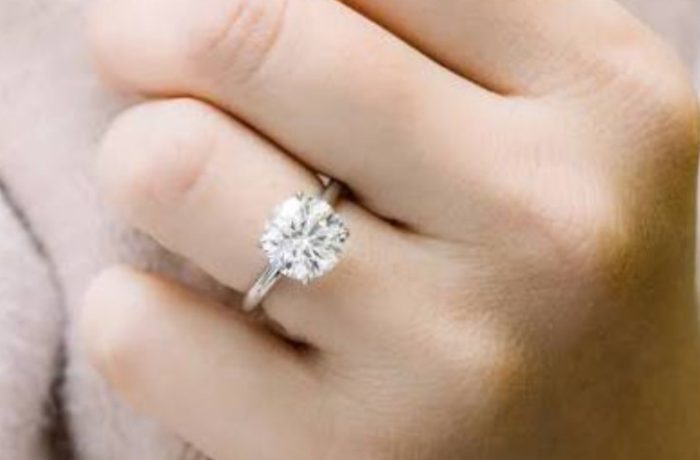
The diamonds that become most meaningful often are those that fit easily into daily life rather than extraordinary pieces brought out only on special occasions. Its wearability, comfort and emotional accessibility enable a diamond to engage in life versus watch from the sidelines.
Meaning accumulates through repetition. A diamond that’s worn will hold a memory) It gets wrapped up in growth, in routine, in every day lived experience. This is not provided by rarity alone, but by presence.
Emotional Precision Over Material Uniqueness
Emotional correctness is how well a diamond reflects its intended use. Does it feel commensurate with the moment it depicts? But does the personality of the person carrying it match the design? Is it just about right, and not over the top?
It is resonance, the sense of emotional precision in a diamond. It does not have to be unique in materials being used, because it is unique in significance. This sort of precision often means more than owning something very few people can.
Why Meaning Resists Comparison
Rarity invites comparison. Meaning resists it. Two individuals can own the same diamond and yet experience it in completely different ways. There are no rankings, orderings or external validation of meaning.
This immunity to comparison is what makes serious diamonds strong. Their value is internal. It does not change according to trends, views or market story-lines. Once established, it remains stable.
The Power of Intention in Enduring Significance
Purpose is always easier to predict the longer the term. Diamonds selected with clear purpose take on their age differently. Updated Reality vs. The Power Rank 12.9 Rugby rankings This is the ranking generated based upon how well each team has performed thus far in the current season, leaving out opinion and what I think will happen in the future.
Intent, too, affects design decisions — scale, setting and style are brought into relation to function rather than exposure. This alignment towards coherence fosters attachment.
When Rarity Matters — and When It Doesn’t
Rarity is not meaningless. It can add even more to a sense of appreciation, skills and historical interest. But it has to be additive, not formative.
Oh, and when the rarity actually fits into a good story it enriches life. When it supplants narrative, it more often leaves the owner with admiration but no attachment.
Knowing this balance, buyers can select diamonds that have emotional “staying power,” even when the faddishness has worn off.
Meaning Outlasts Scarcity
Scarcity can be measured. Meaning cannot. Markets evolve, concepts of rarity change and new extremes arise. The only constant is personal value.
Those that survive are not always the most precious — but the most assimilated — into life, memory, identity. Their worth is not in their scarcity, but in how thoroughly they are lived into.